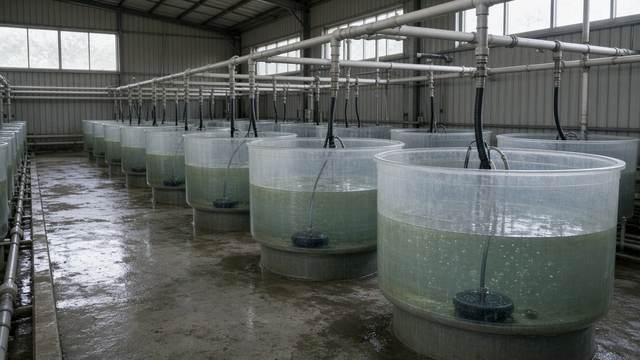
CAMBRIDGE, MARYLAND — Scientists at the University of Maryland Center for Environmental Science's Horn Point Laboratory are helping lead a national study of why oyster larvae suddenly die in hatcheries. A three-year, $800,000 U.S. Department of Agriculture grant pays for the work, the center said in an Oct. 22 article.
The die-offs, called crashes, hit the center's Horn Point Oyster Hatchery on the Choptank River at some point every year, when tens of millions of oyster larvae die within hours. The center says the hatchery produces billions of larvae each year from April through September and is the largest supplier on the Atlantic coast for commercial growers and restoration projects. A 2022 paper led by Horn Point associate professor Matt Gray estimated that a single tank crash at the hatchery can cost $24,000 in lost revenue, not counting extra labor and production costs.
The center calls crashes a looming threat to shellfish aquaculture and, in Maryland, to oyster restoration. In 2019, a long wet winter and spring dropped Choptank River salinity at the hatchery to 5 parts per thousand for nine months, and the hatchery could produce larvae for only about a third of the season. Summer 2026 salinity was 14 parts per thousand. The 2022 paper found "no clear causes or factors have yet been identified to explain the prolonged crashes in 2019."
"Hatchery crashes in general are just a well acknowledged, persistent problem in the industry, but it has, to date, seemed like such an insurmountable problem that everyone reluctantly accepted," Gray said in the center's article.
The center's researchers are part of the Bivalve Hatchery Health Consortium, a group of East Coast scientists and industry members working on the problem since 2023. The new grant will expand sample and data gathering to hatcheries on the Pacific and Gulf coasts and in Hawaii, with a goal of guidance and best practices to avoid crashes. A separate USDA grant will let Horn Point assistant professor Jacob Cram test a backlog of larvae samples the hatchery has kept since 2021. Cram also won Maryland Sea Grant funding this year to study whether hatchery source water drives crashes, sampling water weekly at Horn Point and at Morgan State University's Patuxent Environmental Aquatic and Research Laboratory.
"At the end of the day, we need to be producing oysters," said Stephanie Alexander, the hatchery's director and manager.
Source: University of Maryland Center for Environmental Science
Drawn from public records; drafted with AI and edited by Peter Gorman before publication.
Comments
Signed comments are held for review, then published. Obvious spam is rejected before it reaches the editor. Letters and comments.
No published comments yet.