NEWPORT, RHODE ISLAND — The Chesapeake Bay's cap on industrial menhaden harvest will drop from 51,000 metric tons to 37,123 metric tons in 2027 and 33,847 metric tons in 2028, the Atlantic States Marine Fisheries Commission announced Thursday.
The commission's Atlantic Menhaden Management Board approved Addendum II to the interstate menhaden plan at its annual meeting in Newport. The addendum ties the Chesapeake Bay Reduction Fishery Cap to the coastwide catch limit, setting the Bay cap at 21.8% of the coastwide total allowable catch, with a ceiling of 51,000 metric tons. Until now, the cap was fixed at 51,000 metric tons. The board will revisit the Bay cap at least every three years.
The reduction fishery gets its name because it reduces whole fish into fish meal, fish oil and fish solubles, according to the commission.
The board also lowered the coastwide catch limit to 170,000 metric tons for 2027 and 155,000 metric tons for 2028. This year's limit is 186,840 metric tons. By 2028, the commission said, the limit will be 17% below the 2026 limit and 34% below the 2025 limit.
Projections showed the new limits would carry a 0% chance of overfishing in 2027 and 2028, the commission said, but a high probability that fishing pressure would remain above the target set under its ecological reference points, which account for menhaden's role as food for other fish. The board said it weighed the benefits of leaving more menhaden in the water against the economic harm of further cuts to the menhaden fisheries and to fisheries that rely on menhaden for bait. Most commercial menhaden bait landings go to crab, lobster and hook-and-line fisheries, according to the commission.
The commission said it lowered the Bay cap because of concerns about the effect of reduction harvest on the ecosystem and on other fisheries in the Bay, which it called an important nursery ground for striped bass, osprey and menhaden.
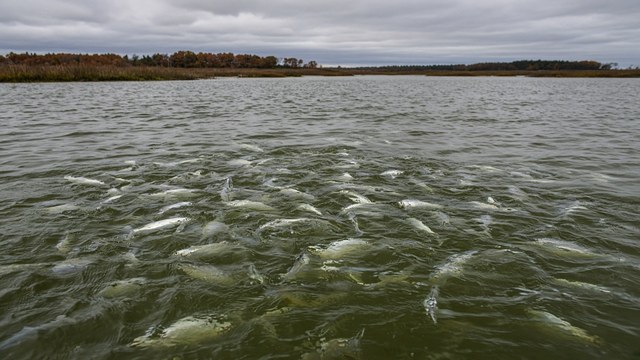
Striped bass and young menhaden are in Talbot waters this fall. The Maryland Department of Natural Resources' Nov. 4 fishing report said striped bass at the mouths of the major tidal rivers were feeding on bay anchovies and juvenile menhaden, and named Eastern Bay and the mouth of the Choptank as two excellent places to look.
"The Board received over 48,000 comments from stakeholders on both sides of these issues – those that advocated for leaving more fish in the water as forage and those who sought to protect the livelihoods of harvesters who rely on menhaden," said Board Chair Joe Cimino of New Jersey.
Cimino said the board pointed to new state, federal and industry funding for menhaden research in the Chesapeake Bay and expects results over the next few years.
The 2027 coastwide limit takes effect Jan. 1, 2027. The new Bay cap takes effect May 1, 2027, ahead of the Bay's reduction fishing season. The commission said the addendum will be posted on its Atlantic menhaden page.
Source: Atlantic States Marine Fisheries Commission
Drawn from public records; drafted with AI and edited by Peter Gorman before publication.
Comments
Signed comments are held for review, then published. Obvious spam is rejected before it reaches the editor. Letters and comments.
No published comments yet.