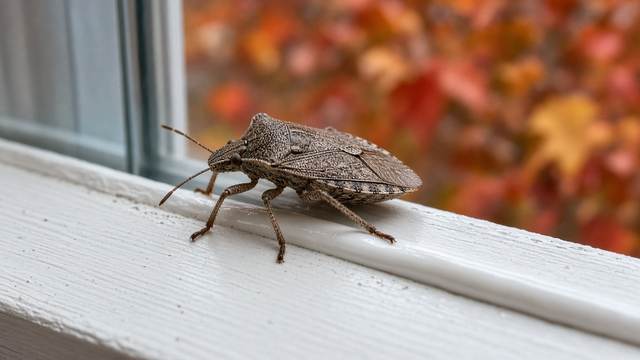
EASTON, MARYLAND — Brown marmorated stink bugs look for a place to spend the winter in the fall, and often that place is inside a house.
University of Maryland Extension says the bugs congregate in late summer and early fall and "actively seek safe overwintering sites- especially inside buildings." They come back out and mate in spring. Indoors, they typically turn up from cracks under or behind baseboards, around window and door trim, and around exhaust fans or ceiling lights.
They are a nuisance, not a danger. Extension says the bugs are not harmful to people, houses or pets. They do not bite, sting, suck blood or spread disease, and they do not eat or bore into wood. They give off a strong, unpleasant odor when threatened or crushed, but Extension says the smell goes away quickly.
The best fix is keeping them out. Extension calls mechanical exclusion the best way to keep stink bugs from getting into homes. That means finding the openings and sealing cracks around windows, doors, siding, utility pipes, behind chimneys and under wood fascia with good-quality silicone or silicone-latex caulk, and repairing or replacing damaged door and window screens. Extension's question-and-answer page adds weather stripping around doors and windows and removing window air conditioners.
For bugs already inside, Extension recommends two low-tech methods:
- Vacuum them. A dry or wet vac works well, though the canister or bag will smell for a while. Some people slip a knee-high stocking over the outside of the vacuum tube, secure it with a rubber band and stuff it into the tube to catch the bugs before they reach the bag. Then they turn off the vacuum and empty the bugs into soapy water.
- Sweep them into soapy water. Cut the top off a straight-sided plastic container of a half gallon to a gallon, fill the bottom quarter with water and a teaspoon of liquid detergent or soap, and sweep the bugs in, or slide the container up a wall or window so they drop in.
Extension advises against sprays. It says pesticides are generally ineffective and not recommended for this pest inside or outside the home. Aerosol foggers are not recommended indoors, and insecticidal dust in wall voids or attics can backfire: carpet beetles may feed on the dead stink bugs and then move on to woolens and stored dry goods.
The insect is native to parts of Asia and was first seen in the United States in Allentown, Pa., in 2001, according to Extension, which says it has since spread from Washington County to other parts of Maryland. The bugs come out of their winter hiding spots from late March through June.
Source: University of Maryland Extension
Also: University of Maryland Extension (2), University of Maryland Extension (3)
Drawn from public records; drafted with AI and edited by Peter Gorman before publication.
Comments
Signed comments are held for review, then published. Obvious spam is rejected before it reaches the editor. Letters and comments.
No published comments yet.