EASTON, MARYLAND — November is the month to put the garden to bed, and University of Maryland Extension's monthly checklist for home gardeners has a few jobs that are easy to miss.
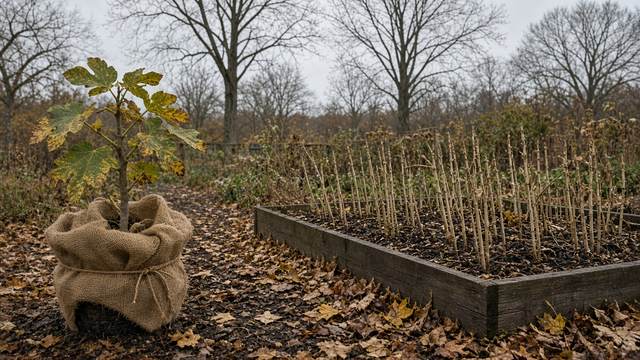
Fig trees come first. The extension says to insulate them from sub-freezing temperatures with a tarp or masses of autumn leaves or straw, because exposed wood can be damaged when temperatures fall below 20 degrees for an extended period.
In the vegetable garden, cut asparagus down to 2-inch stubs after the first frost. A 4- to 6-inch layer of mulch will help control weeds while slowly adding organic matter and nutrients to the soil. Beds without a cover crop should be kept covered with autumn leaves or mulch to cut erosion, nutrient runoff and weeds.
Shrubs that suffer in winter wind, such as azalea, rhododendron, holly, cherry laurel and boxwood, can be shielded with a barrier of burlap or plastic held up by stakes set about 12 to 18 inches from the plant. Perennials get their mulch after the first hard freeze, which helps protect them from frost heaving.
Shade trees can be pruned once their leaves have fallen. Do not cut branches flush with the trunk: leave the swollen branch collar, but no stub. Topping, the extension says, is not the correct way to control a tree's size.
Two things not to do: it is too late to sow lawn seed and expect it to survive the winter, so wait until spring. And do not leave fallen leaves in an uncovered pond, where gases from decomposing leaves trapped under ice can sicken or kill fish.
A soil test can be done anytime the ground is not frozen.
Source: University of Maryland Extension
Drawn from public records; drafted with AI and edited by Peter Gorman before publication.
Comments
Signed comments are held for review, then published. Obvious spam is rejected before it reaches the editor. Letters and comments.
No published comments yet.