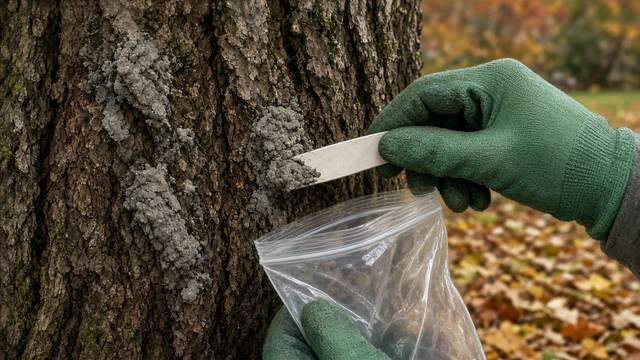
EASTON, MARYLAND — This is the time of year to look for spotted lanternfly eggs on trees, decks and patio furniture, and University of Maryland Extension says a plastic card and a container of rubbing alcohol can take care of them.
Fresh egg masses appear from September through December, according to Extension's home-garden guide. Each is about an inch long, holds 30 to 50 eggs and has a gray, mud-like covering that cracks as it dries. Females lay them on almost any flat vertical surface: tree trunks, stones, vehicles, grills and outdoor furniture. The eggs last through winter and hatch in spring, while the adults die by the start of winter.
To get rid of them, Extension says to scrape egg masses off bark and hard surfaces with a plastic card or a putty knife, then crush the eggs with gloved hands or drop them into rubbing alcohol or hand sanitizer. Its October checklist also suggests scraping them into soapy water. Check the identification first, because many beneficial insects also lay egg masses on bark. Praying mantis egg cases, for one, should be left outdoors over the winter.
Extension advises against spraying in home yards. Pesticides and home remedies can harm pollinators and beneficial insects and won't reach all of the lanternflies. The insects do not bite or sting people or pets, and they do not kill trees, though heavy feeding can stress them. Removing tree-of-heaven, an invasive tree that is a primary host, helps. It looks a lot like native sumac and black walnut, so confirm the identification before removal, and follow Extension's guidance on how to remove it.
Talbot is one of eight Maryland counties listed with light infestations, based on the Maryland Department of Agriculture's map as of March 2026. The state's lanternfly quarantine covers all 23 counties and Baltimore City. Extension says light infestation doesn't lessen the need for reports, and MDA takes sightings from every county through its online form, by email at DontBug.MD [at] maryland.gov or by phone at 410-841-5920.
Source: University of Maryland Extension
Also: University of Maryland Extension (2)
Drawn from public records; drafted with AI and edited by Peter Gorman before publication.
Signed comments are held for review, then published. Obvious spam is rejected before it reaches the editor. Letters and comments.
No published comments yet.