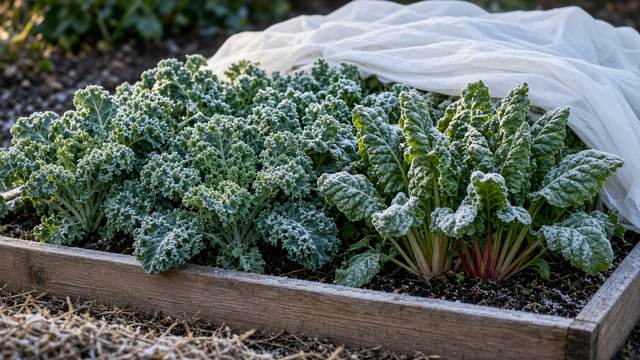
EASTON, MARYLAND — A light frost doesn't have to end the vegetable garden in Talbot County. For many cool-season crops, University of Maryland Extension says, it makes them better.
Frosts increase the sugar content and improve the flavor of many cool-season crops, according to Extension's Home and Garden Information Center, and the conversion of starch to sugar also makes the plants more cold-hardy.
Some crops handle more cold than others. Extension lists broccoli, cabbage, lettuce, kale, spinach, arugula, bok choy and turnip greens among the hardy crops that will withstand a hard frost. Beets, carrots, Swiss chard, mustard greens, radishes and cauliflower are half-hardy and will tolerate light frosts.
Growth slows as the days get shorter. Vegetable growth is very limited once sunlight drops below 10 hours a day, which in Maryland runs from about mid-November through late January.
Root crops can wait in the ground. Extension says beets, turnips and carrots can be harvested through December if the bed is covered with an insulating mulch to keep the roots from freezing. Cold frames and row covers give some cold protection and stretch the harvest.
Some crops will ride out the winter with protection and grow again in spring, including spinach, arugula, kale, mâche, parsley and chicories such as radicchio, escarole and endive.
One caution for winter greens: heavily fertilized leafy greens can build up too much nitrate in low light. Extension advises using compost and organic fertilizers sparingly on protected greens that will be picked from December through February.
For a bed that is being replanted, Extension suggests spreading ½ to 1 inch of compost on top before planting and mulching exposed soil to keep new weeds from sprouting.
Source: University of Maryland Extension
Drawn from public records; drafted with AI and edited by Peter Gorman before publication.
Signed comments are held for review, then published. Obvious spam is rejected before it reaches the editor. Letters and comments.
No published comments yet.