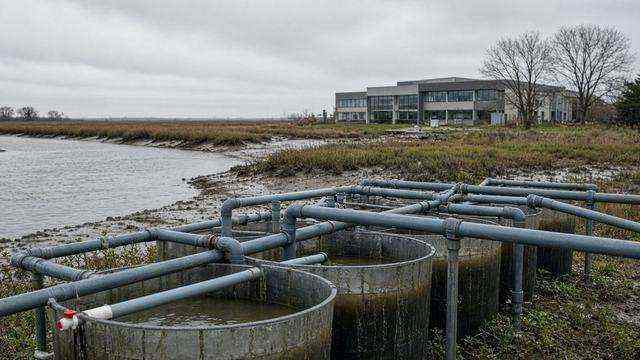
HARRIS CREEK, MARYLAND — Harris Creek and the Tred Avon are Talbot County's two finished tributary-scale oyster sanctuaries. Almost every oyster on those reefs started somewhere else — at the Horn Point Laboratory hatchery on the Choptank, in Dorchester County, outside Cambridge.
In April, as The BayNet reported, NOAA cut Horn Point's annual oyster-hatchery grant from $740,000 to $400,000. That was a $340,000 reduction, a little under half the federal support the lab had counted on.
By June the hole had been filled for this growing season. Maryland lawmakers wrote $400,000 for the hatchery into the state budget. The Banner reported on June 3, 2026, quoting UMCES and Sen. Chris Van Hollen’s office, that NOAA then backfilled more than $350,000 after Van Hollen pushed the money into a funding bill. Lab director Mike Sieracki said Horn Point would keep its staff and run at full force through this season, which ends in October.
What has not been solved is the year after that. The cut landed in the last year of a multi-year grant. A one-season patch is not a replacement for the federal line. No public NOAA grant PDF for this cycle was located for this report; the dollar figures rest on BayNet’s cut accounting and The Banner’s June 3 backfill account.
Horn Point has produced roughly 90 percent of the juvenile oysters planted into Maryland's restoration tributaries — on the order of six billion animals over the life of the program, per hatchery managers quoted in BayNet/Bay Journal coverage. It is not one supplier among several. It is effectively the supply. Restored reefs are not finished objects. They need maintenance plantings, and the oyster gardeners on the Miles and the Tred Avon need seed.
That is why the cut, even patched, still lands in Talbot. Fewer spat-on-shell out of Horn Point in a future season means slower reef maintenance in this county's two marquee sanctuaries, at the moment the state is holding those sanctuaries up as completed work.
It also puts a sharper light on Talbot's own $125,000 Choptank planting this summer, which bought its spat commercially rather than from Horn Point. A county buying its own seed is either prudent diversification or an early sign that public seed can no longer be counted on. The answer is in the next grant cycle, not in this one. Statewide supply talk does not erase a thin season on a Talbot creek.
Source: The Banner
Drawn from public records; drafted with AI and edited by Peter Gorman before publication.
Signed comments are held for review, then published. Obvious spam is rejected before it reaches the editor. Letters and comments.
No published comments yet.