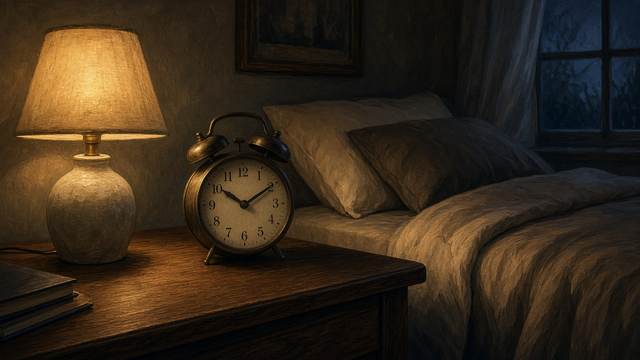
EASTON, MARYLAND — Daylight saving time ends at 2 a.m. Sunday, Nov. 1. At that moment, local time becomes 1 a.m. and the hour repeats, according to the National Institute of Standards and Technology, which serves as an official timekeeper for the United States. The change moves an hour of daylight from the evening to the morning.
The fall switch is often sold as an extra hour of sleep. The American Academy of Sleep Medicine, a professional society focused on sleep care, says it is not that simple. In a 2024 position statement in the Journal of Clinical Sleep Medicine the academy wrote that the fall change to standard time "has been associated with sleep disruption," along with mood disturbance, patient safety-related incidents, suicide and traffic accidents. The statement describes those as associations drawn from earlier studies. It says many of the short-term effects researchers have identified come with the spring change, when clocks jump ahead and people lose an hour of sleep opportunity.
The academy's position is that the United States should end seasonal clock changes and adopt permanent standard time, which it says "aligns best with human circadian biology." That is a policy recommendation. For now, the clocks still change twice a year.
How much sleep people need depends on age, the Centers for Disease Control and Prevention says. Its guide lists seven or more hours a day for adults 18 to 60, seven to nine hours for ages 61 to 64, and seven to eight hours for adults 65 and older. It lists eight to 10 hours for teens 13 to 17 and nine to 12 hours for children 6 to 12.
Many adults fall short of that. The CDC counts adults who report sleeping less than seven hours as having short sleep duration. Its PLACES project, in its 2025 release, estimates that 31.9% of Talbot County adults had short sleep in 2022, or 34% after adjusting for age. PLACES figures are model-based estimates built from survey data, not a head count, and the age-adjusted Talbot figure has a confidence range of 29.6% to 38.7%. State rates of adults not getting enough sleep in 2022 ran from 30% of adults in Vermont to 46% in Hawaii, the CDC says.
The CDC says getting enough sleep can help people get sick less often, reduce stress, lower the risk of type 2 diabetes, heart disease, high blood pressure and stroke, and lessen the risk of motor vehicle crashes.
The CDC and the National Heart, Lung, and Blood Institute, part of the National Institutes of Health, both list everyday habits tied to better sleep. They include going to bed and getting up at the same time every day; keeping the bedroom quiet, cool and dark; turning off electronic devices at least 30 minutes before bed; and avoiding large meals and alcohol before bedtime. The NHLBI says the effects of caffeine can last up to eight hours, so late-afternoon coffee can make it hard to fall asleep. It also suggests keeping weeknight and weekend sleep times within about an hour of each other and spending time outside every day when possible.
Some sleep problems are more than habit. The CDC names insomnia, restless legs syndrome, narcolepsy and sleep apnea as common sleep disorders. Warning signs of poor sleep quality include trouble falling asleep, waking repeatedly during the night, and feeling sleepy or tired even after enough sleep. The agency says people who regularly have problems sleeping should talk to a health care provider, who can run tests, including sleep studies.
The clocks go back at 2 a.m. Sunday.
Source: NIST
Also: Journal of Clinical Sleep Medicine, CDC, CDC (2), CDC PLACES, NHLBI
Drawn from public records; drafted with AI and edited by Peter Gorman before publication.
Comments
Signed comments are held for review, then published. Obvious spam is rejected before it reaches the editor. Letters and comments.
No published comments yet.