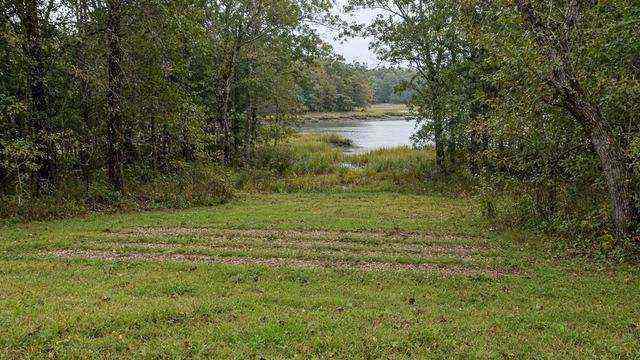
EASTON, MARYLAND — Talbot County is still taking Bay Restoration Fund applications to replace conventional septic tanks with nitrogen-reducing Best Available Technology units. Fiscal Year 2027 grant resources are posted on the Department of Public Works page.
What the grant pays. BRF funding covers the cost and installation of a BAT system plus a two-year operations-and-maintenance package. After those two years, the owner pays for certified O&M inspections. The grant does not pay for non-BAT pieces such as drain fields unless the owner qualifies as low-income under MDE rules. Where public sewer is available, the same fund can support sewer connections of existing dwellings.
Who gets funded first. Public Works prioritizes complete applications in this order: failing septic systems in the Critical Area; failing systems outside the Critical Area; systems with no county permit record or non-conventional systems in the Critical Area; the same categories outside the Critical Area; then permitted conventional systems in the Critical Area; then permitted conventional systems outside it. The county FAQ defines the Chesapeake Bay Critical Area as land within 1,000 feet of the tidal high-water line.
Income tiers on the county page. If total household income on the federal 1040 is under $300,000, the owner may be eligible for 100 percent grant funding of the BAT unit (tank only). Over $300,000, income paperwork is not required for that tier and funding can drop to 50 percent of the tank. LLC and other business-owned properties generally face a 50 percent ceiling, with a possible path to 75 percent for qualifying small businesses; nonprofits can be 100 percent eligible for the tank with Form 990 verification. New construction carries a $1,200 deductible from the grant formula.
How to apply without wasting a contractor visit. Start with the Office of Environmental Health at (410) 770-6880 for a Sanitary Construction Permit path — Letter of Determination, issued SCP design, and a three-way agreement with the septic contractor and BAT vendor. Then submit to Public Works: a notarized Public Works Agreement signed by every living deeded owner, current-year federal tax return materials as required, the OEH documents, and the three-way agreement. The FY2027 application-process summary is explicit: do not install before Public Works issues a written grant offer. Grant funds for the BAT unit are paid to the vendor.
Who to call. Program coordinator Kendra Blake, Project Manager I, Department of Public Works, 410-770-8170, KBlake [at] talbotcountymd.gov. Licensed septic contractor lists and BAT ranking documents are linked from the same Public Works BRF page.
Nitrogen leaving a failing tank still reaches the Bay. The county's own priority list puts Critical Area failures first for a reason.
Source: Talbot County Government
Drawn from public records; drafted with AI and edited by Peter Gorman before publication.
Signed comments are held for review, then published. Obvious spam is rejected before it reaches the editor. Letters and comments.
No published comments yet.