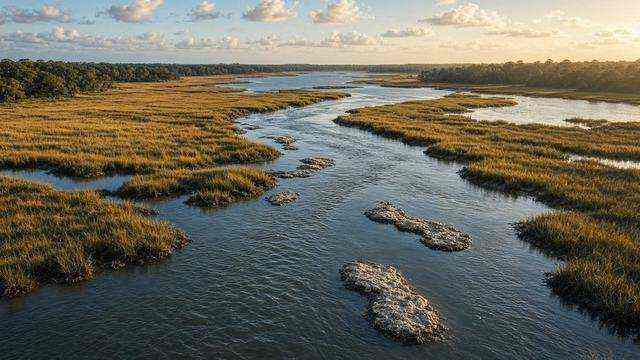
Maryland’s August 11 scoreboard says the Bay plan mostly worked. Talbot’s creeks still fail the swim standard most of the time. Sanctuary reefs and statewide nutrient math do not replace local runoff work.
On August 11, 2026, Governor Moore’s office said Maryland had hit 100 percent of its 2025 phosphorus and sediment reduction goals and 99 percent of nitrogen, measured from 2009 to 2025 against the 2014 Chesapeake Bay Watershed Agreement. The same release marked completion of all five tributary-scale oyster restoration sanctuaries: Harris Creek, Little Choptank, Tred Avon, St. Mary’s, and the Manokin. Two of those — Harris Creek (348 acres restored; 343 met the six-year success metrics on DNR’s Harris Creek page) and the Tred Avon (130 acres on DNR’s restoration page when initial construction finished in 2021; 131 acres in the CBP 2024 update after 0.84 additional acres that year) — are Talbot water. Adult oysters in Maryland’s Bay have roughly tripled since 2005, from about 2.4 billion to 7.6 billion-plus, per the state’s May 2025 stock assessment. That is the Annapolis ledger.
The dock ledger is different. Do not mix Blitz years. ShoreRivers’ 2025 (second annual) Bacteria Blitz failed 31 of 40 mid-Shore sites against Maryland’s swim standard; Miles-Wye and Eastern Bay passed one of seven. The 2026 (third annual) Blitz, after rain ahead of sampling, found about 47 percent of sites passing. Nitrogen left on a field or a parking lot still reaches those creeks. DNR Secretary Josh Kurtz named stormwater and farm runoff as the hard remainder for the next phase.
Next named sanctuary-scale waters include the Nanticoke, Herring Bay, and Hoopers Strait. Eastern Bay is a separate multi-use planting project, not that same list, even when the August release puts it in the same paragraph.
What conservation looks like here is not a podium. It is Ferry Cove spat-on-shell on public Choptank bars with the Talbot Watermen Association, ESLC easements that now cover more than 13,950 acres in the county, cover-crop checks at the soil-conservation district, Phillips Wharf Environmental Center at Easton Point Park (relocated from Tilghman after 2021), and a Riverkeeper with a weekly bottle. The full map is in the Bay briefing.
Source: Dnr
Drawn from public records; drafted with AI and edited by Peter Gorman before publication.
Signed comments are held for review, then published. Obvious spam is rejected before it reaches the editor. Letters and comments.
No published comments yet.